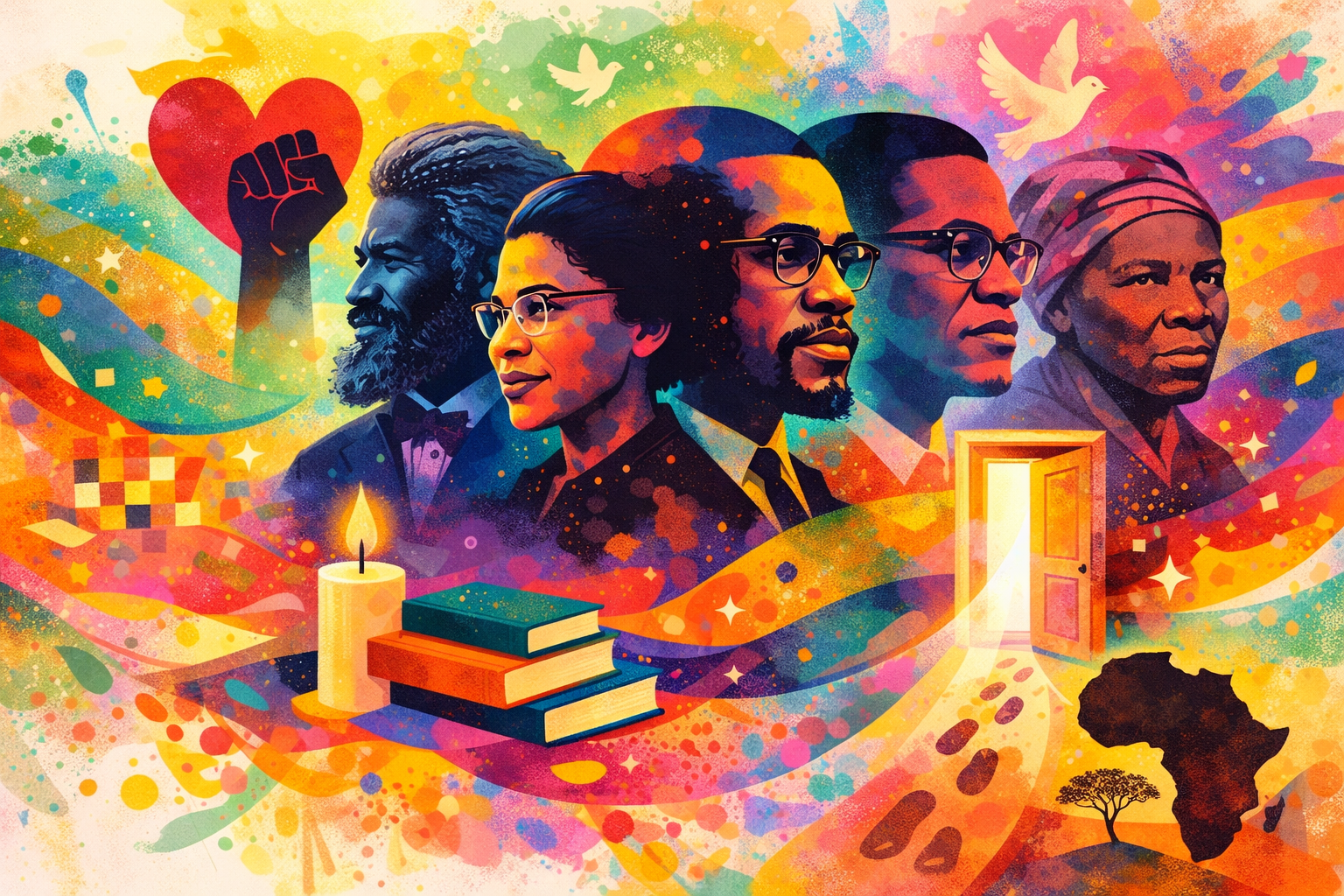
February, and the Work of Making Space
Before I share from a point of vulnerability and humility, I have been told that my “white privilege” prevents me from understanding.
Perhaps it does.
“No. Not perhaps!” was the feedback I received.
So I share this truth: I don’t know what it’s like to lose a child, but that doesn’t mean I don’t care.
I don’t know what it’s like growing up as a woman in a blatantly sexist word…but that doesn’t mean I don’t care.
In a world of “I Don’t Give a F…” I do. I care.
I care enough that it hurts not seeing any recognition of Black History Month except for the odd social media post acknowledging it’s centennial. I care, so I’ll speak up, right or wrong, because I see and feel a void, at least in my community, that should be filled with honor and acknowledgement
With that unfortunate but seemingly necessary disclaimer out of the way, and with my intentions and emotions clearly expressed: Honor, Gratitude, Appreciation, Compassion…I’ll share from my heart, again.
This February marks one hundred years since the initial efforts to formally acknowledge Black History in this country. But it doesn’t mean Black History Month has existed for a hundred years.
It hasn’t.
What began in 1926 as Negro History Week was an act of insistence, not an act of generosity. It was an intentional effort by Black scholars and communities to preserve and honor a history that was being misrepresented, ignored, or erased completely. It would take another fifty years before that week would be expanded and formally recognized as a full month.
So while this year marks the hundredth anniversary of the work of acknowledgment, it also exposes a harder truth: there has only been a nationally recognized Black History Month for fifty years. Not 100.
That distinction matters because it reminds us just how recent this recognition actually is, and how long Black history existed without space, without visibility, acknowledgment, or institutional respect.
Here’s another humble truth: It has bothered me for years…for decades…that February was the month chosen to acknowledge Black History in America. “Really? The shortest month? Black History gets the shortest month?” It took caring enough to do the digging to see that February wasn’t an arbitrary month, or an attempt to slight a movement. February was already sacred…already honored within Black communities long before it was ever formally recognized.
That context matters, and it deserves respect. And still, I’ll be honest: it stings. It stings to recognize that this month is two or three days shorter than any other. It stings to see how clearly our culture reveals its priorities. As soon as Christmas decorations come down in grocery stores, Valentine’s Day goes up…nearly seven weeks of visibility, marketing, and celebration. Black History Month falls four weeks after Christmas. And even then, I don’t see it in the aisles. I don’t see it on the end caps. That contrast doesn’t diminish the meaning of February…but it does expose how much further we still have to go in what we choose to promote, amplify, honor, and make space for.
It’s unfortunate that we have to designate months at all for marginalized communities. But until we don’t need to any longer…we must.
In a healed world, dignity wouldn’t need a reminder or a calendar. Recognition wouldn’t require advocacy. Compassion wouldn’t need to be scheduled. But we do not live in that world yet…and pretending otherwise doesn’t make it so.
Healing requires space.
Healing requires patience.
Healing requires acknowledgement.
And acknowledgment is not passive. It is not performative. It is not silent.
That truth feels even more urgent in the present moment. There are ongoing efforts…through policy decisions, institutional reviews, and cultural pressure…that have resulted in the removal, restriction, or softening of how Black history is taught, displayed, or discussed. Books are challenged. Curriculum is narrowed. Exhibits and signage that address slavery, segregation, and racial injustice are questioned, revised, or quietly removed in the name of comfort or “unity.” Whether framed as neutrality or tradition, the effect is the same: less truth, less context, less space.
A compassionate response doesn’t require outrage. It requires vigilance. Because when history is reduced, so is our capacity to understand and connect with one another.
“Privilege” does not prevent empathy.
Difference does not excuse indifference.
Black History Month is not about guilt.
It is about honoring the lives, labor, brilliance, resilience, creativity, leadership, love, and humanity of Black people…past and present…without rushing, without minimizing, without asking that history be softened to make others more comfortable.
So here is my call to action, simple and sincere:
Please make space.
Make space in conversations.
Make space in classrooms.
Make space in workplaces, communities, churches…and in policies and practices.
Show support…not ONLY in February, but ESPECIALLY in February.
Let this month be a conscious social response that honors, heals, and makes room…consciously, compassionately, respectfully…on purpose.

 Harvesting Insights