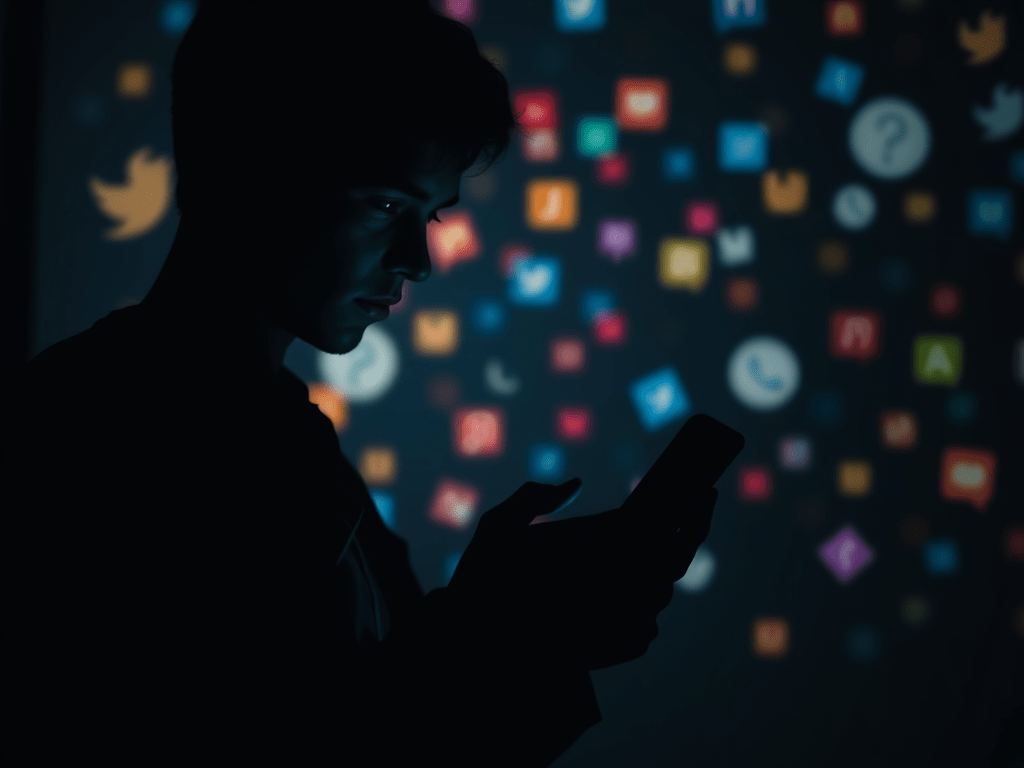
How “Likes” and Memes Became Our Drugs of Choice
In the shadow of white-collar addicts and the opioid crisis, another addiction quietly undermines our wellbeing. We don’t smoke it. We don’t drink it. We don’t pop a tidy little “prescription” pill. We scroll.
We, “like, comment, and share” every fascinating, hyper-stimulating, mind-baffling post. Every click, every little red heart, every comment or notification delivers a microdose of dopamine. The same dopamine that fuels drug addiction in the first place. We’ve swapped our dealer for a developer, and the line differentiating the two is frighteningly blurred.
Ponder this: Only drug dealers and software companies refer to their customers as “users.” That word alone exposes an insidious truth: both addictions thrive on dependency, both hijack the brain’s reward system, and both profit from our inevitable and insatiable surrender. And just as there are synthetic drugs, we are swimming in synthetic dopamine. What’s more synthetic than synthetic? More stimulating that stimulating? The prevalence of AI.
I remember watching, with clenched fists, as Tony Hawk fought and fought and fought to finally land a 900 at the X Games!!! Flying through the air, rotating two and a half times before slamming into the ground, over and over again on live TV…and he finally landed it. An iconic moment permanently burned into my memory cells. But now, thanks to AI, we can watch Steven Hawking do the same thing from the comfort of his wheelchair. Tasteless. Disrespectful. Yet we watch.
Sadly, funny isn’t funny enough anymore.
Pretty isn’t pretty enough anymore.
Shocking isn’t shocking enough anymore.
We need more. Always more.
We need more like any addict needs more of their vice-of-choice: If it bleeds it leads. A higher high, a bigger bet, more risk. The rush of those new $200 sneakers wearing off, turning into a need for $1,500 sneakers to get the same high.
Another thought to ponder before you throw you iPhone off the nearest cliff: There are now Only-Fans pages with AI models trying to out-pretty, out-sexy, out-perform, and out-shock other AI models with other Only-Fans pages. Where does that lead us? Where does that leave young women today? And young men for that matter?
How much is enough? The answer: There will never be enough.
So how do we fix it? Perhaps we take the advice of ‘Joshua;’ the war simulating computer in the 1983 hit movie, War Games:
“A strange game. The only winning move is not to play.”
When our phones were connected to the wall we were more connected with each other. Now that our phones are no longer connected…neither are we.
Technology used to liberate us. Now has rewired our attention and blurred the boundary between virtual and reality. Like any addictive substance, it offers a high followed by a hollow. We reach for it to escape discomfort, only to find the void deepens when the screen goes dark.
Breaking free doesn’t mean rejecting technology completely. It means reclaiming our individual and collective agency. It means using these tools, not being used by them.
Perhaps it’s time to step back from the screen, to remember that life is meant to be experienced directly. It’s meant to be lived, not “liked.” In the end, it’s not about losing countless hours to our screens…it’s about losing ourselves.

 Harvesting Insights